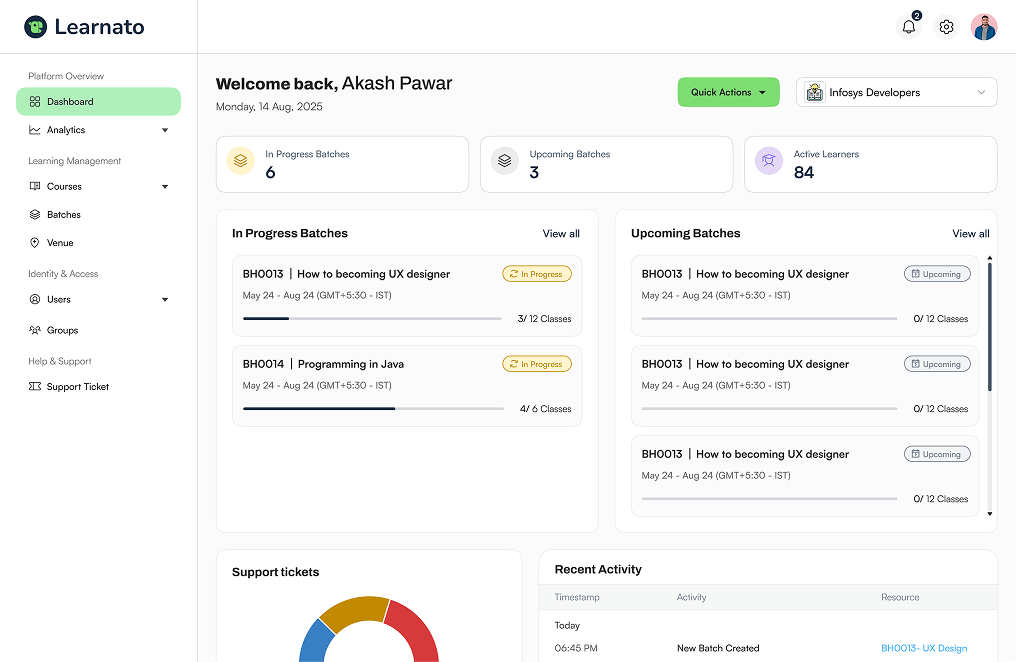
Competency Builder
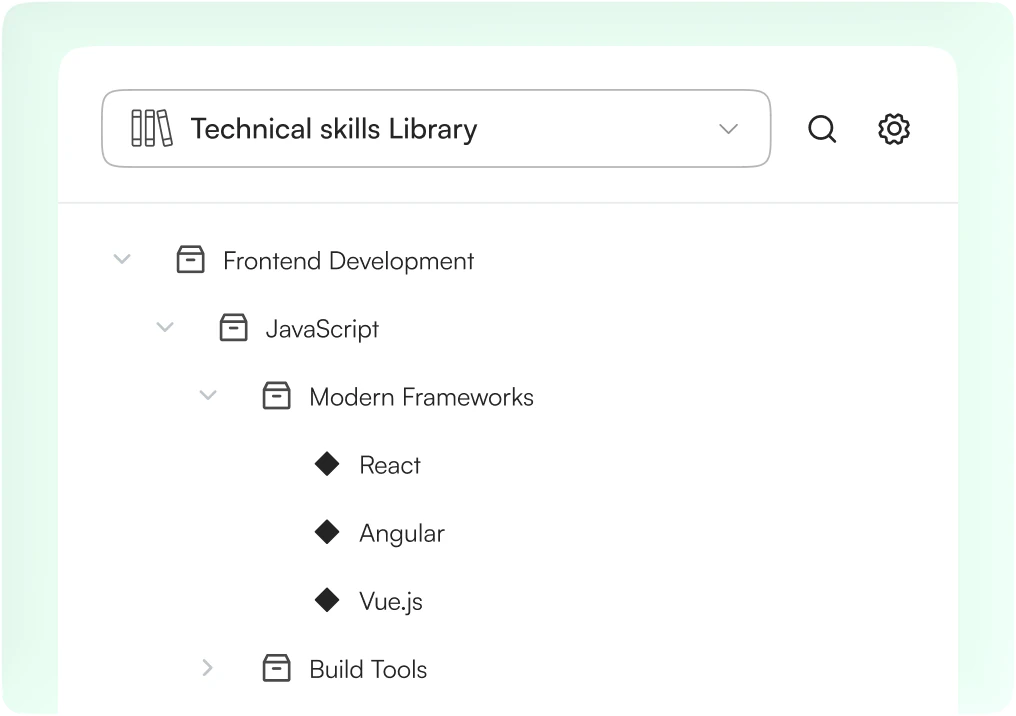
Ops adds skills into hierarchical libraries.
Skills & Competency
Skills & Competency lets your team define what "good" looks like for every role, then proves who's actually reached it through self-ratings, assessments, and manager sign-off, not guesswork.
Capabilities
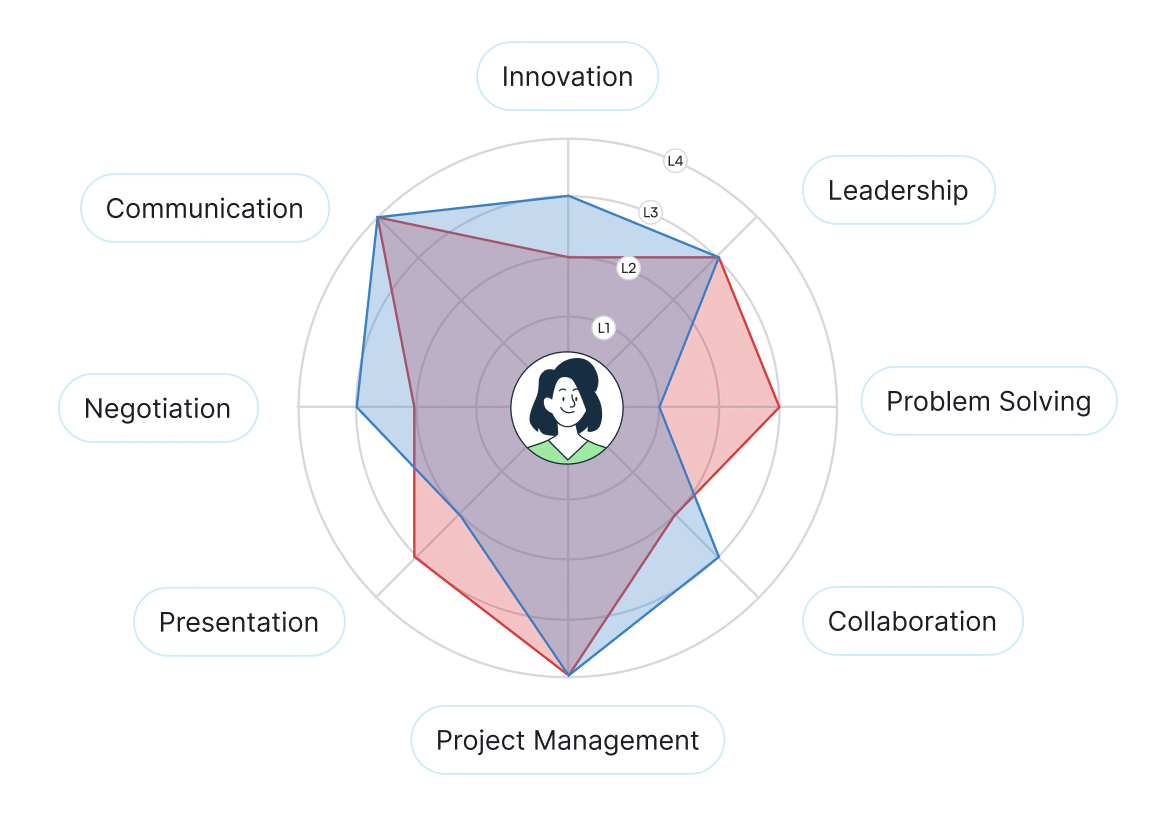
In Learnato you can collect feedback from learners from subordinates to management. This helps identify the employee's strengths, areas for improvement, and the suitability for their roles.
Competency Builder
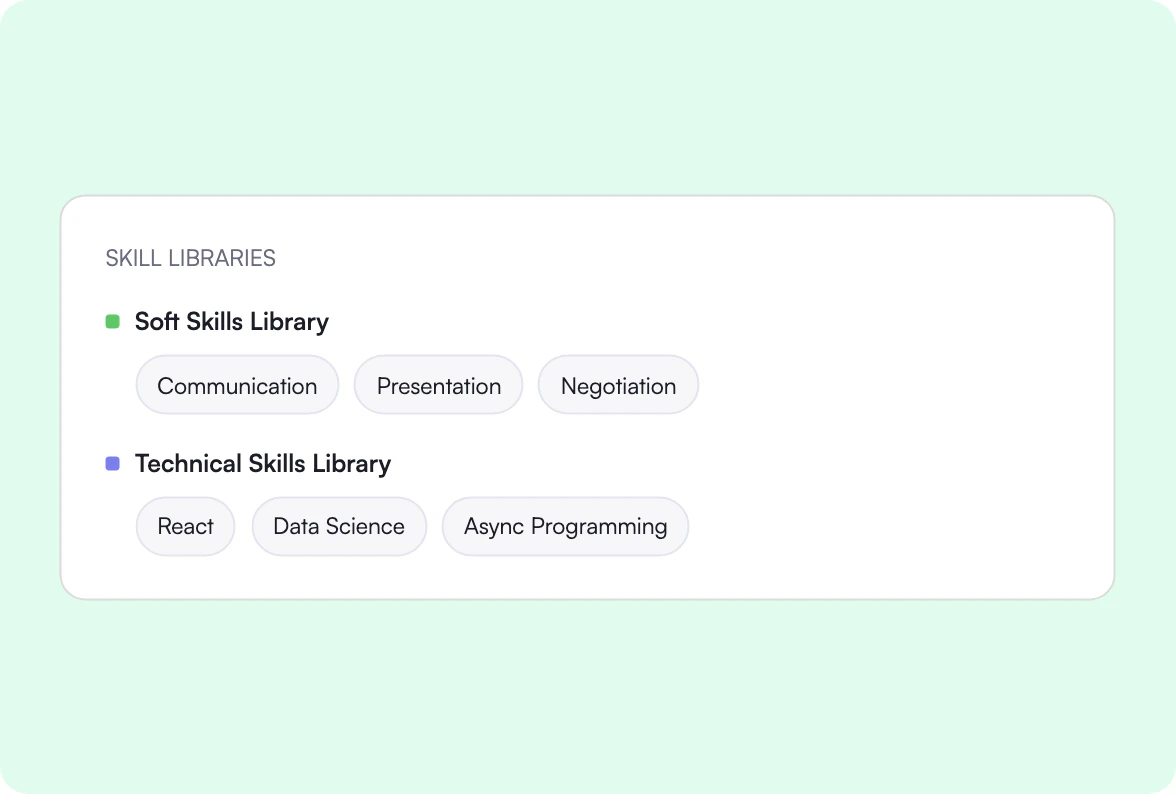
Admins and ops build skill libraries once, in a hierarchical structure, then reuse them everywhere — in job roles, courses, and quizzes. No skill gets typed in twice.
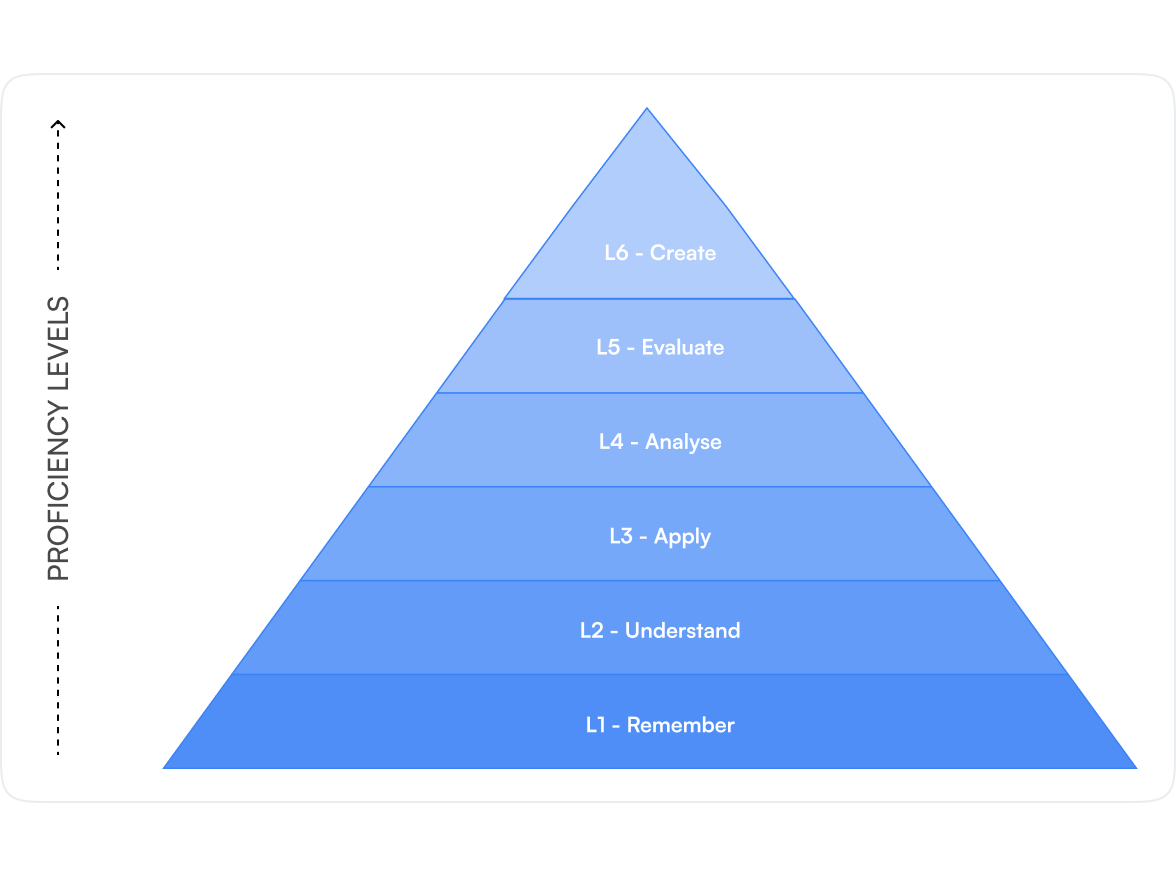
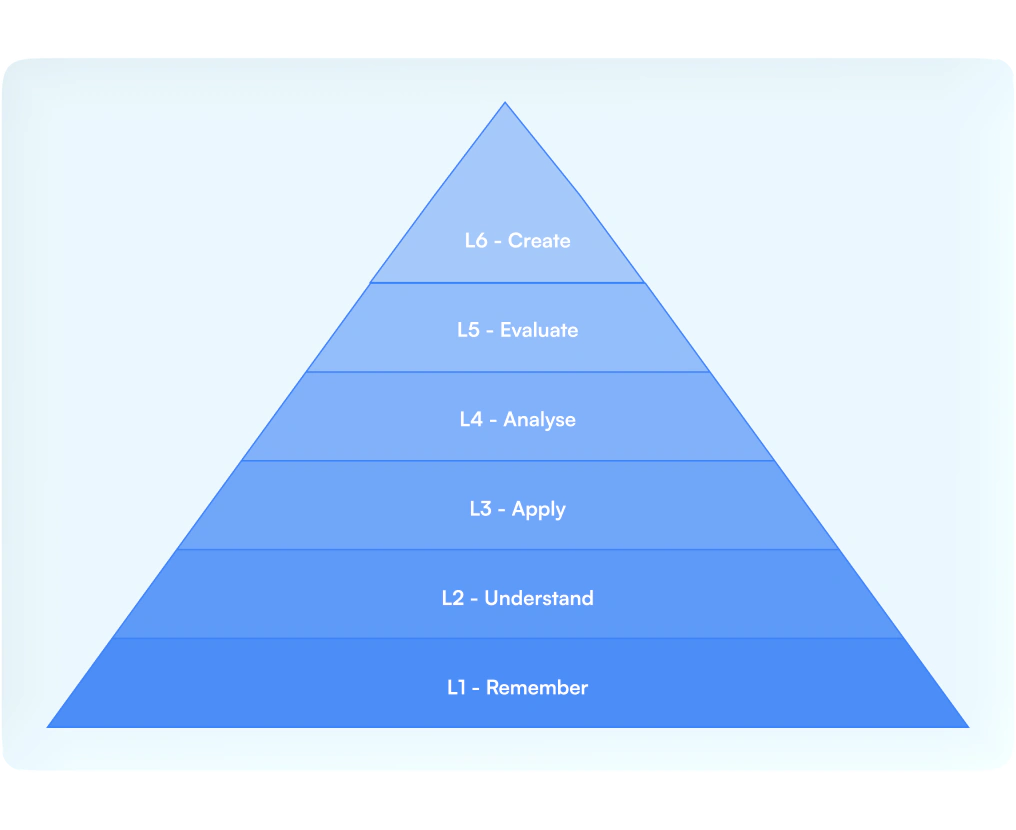
Taxonomy
Create as many taxonomies as your org needs — name each one, pick a color, and set its levels. Mark one as default so it applies automatically wherever a level is needed.
How it works
Six pieces work together as one system — each one feeds the next, and every learner's result rolls up into a single, evidence-backed skill record.
Ops adds skills into hierarchical libraries.
Define proficiency levels, e.g. Bloom's L1–L6.
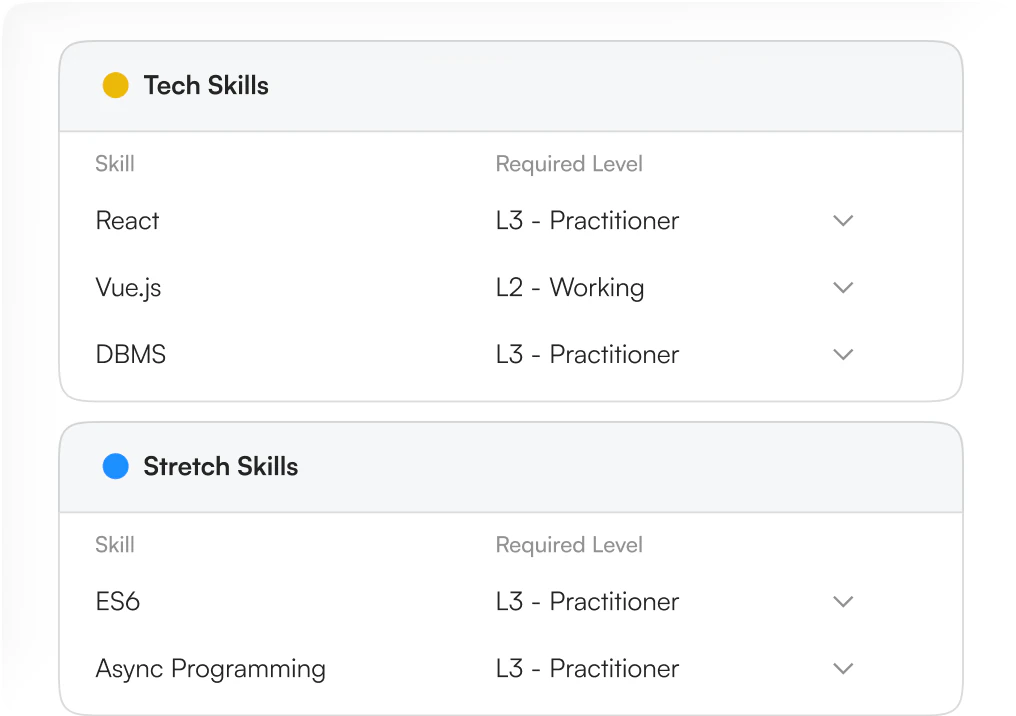
Attach skills and required levels to a role.
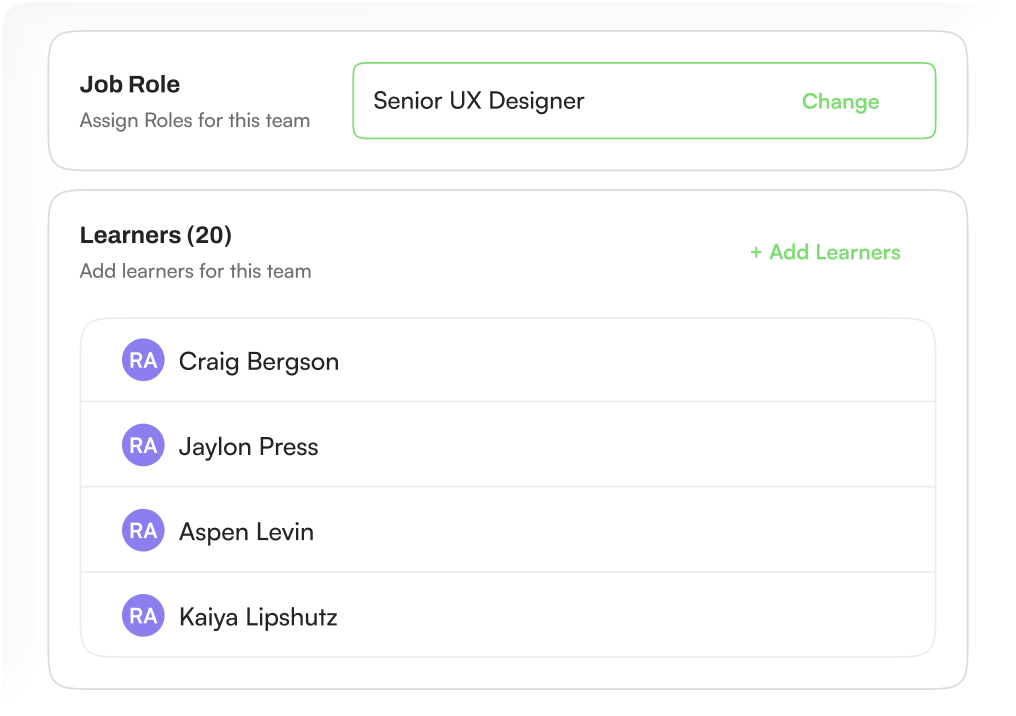
Assign learners a role, trigger self-assessment.
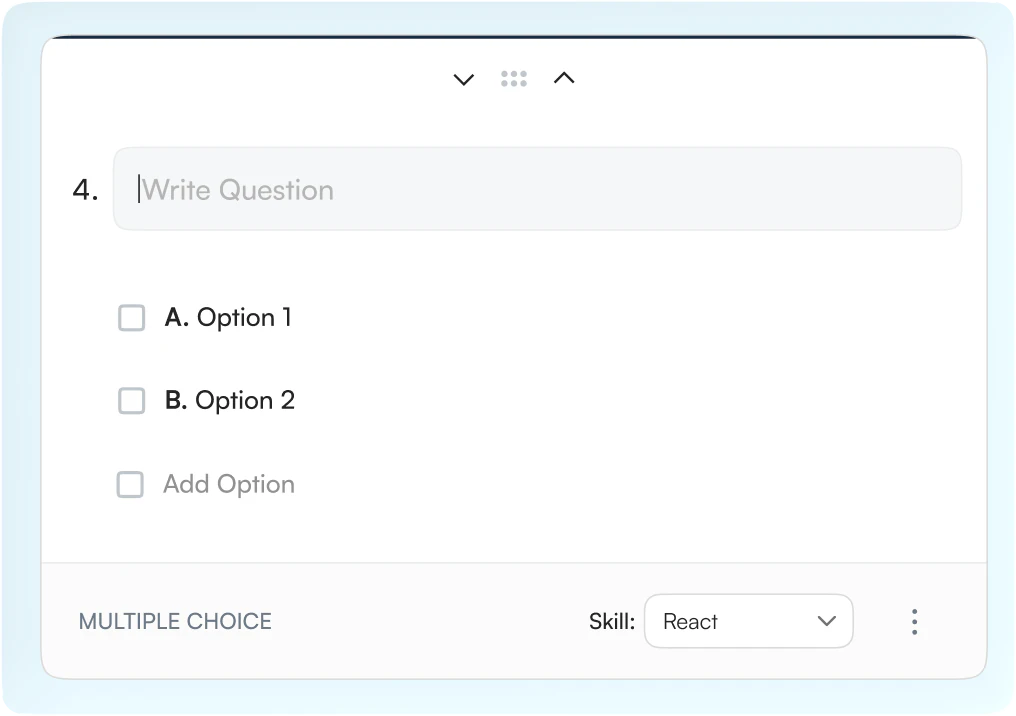
Bind each question to a skill and level.
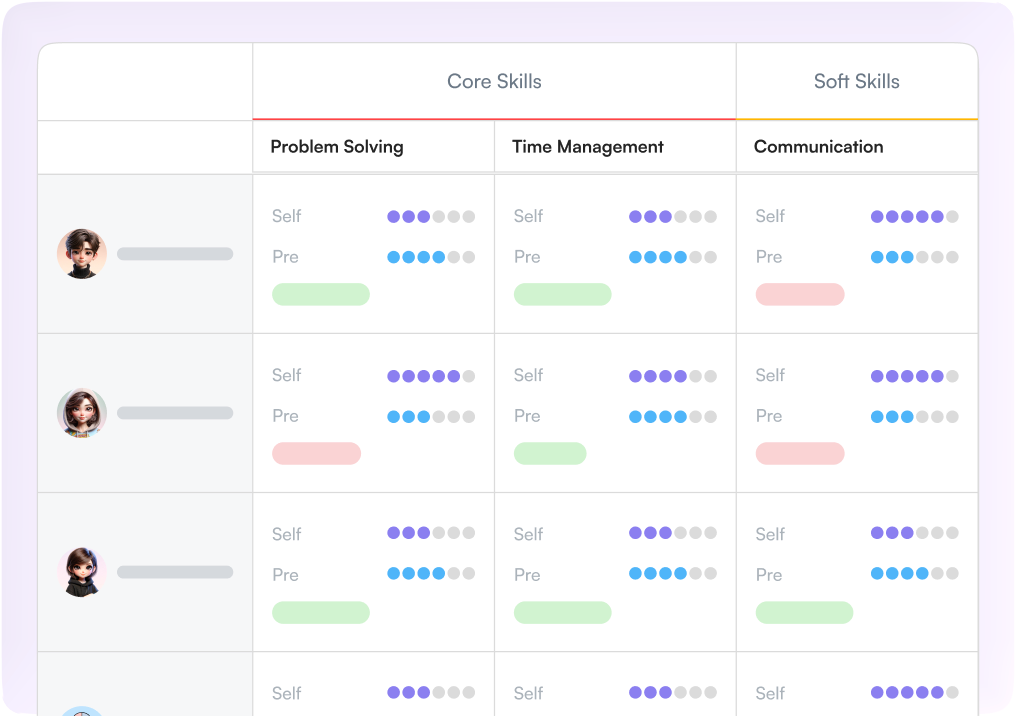
See growth, gaps and readiness per learner.
Skill Evidence
A course is built from skills too — each added with a required level, defaulting to the org's default taxonomy. The course creator then binds every quiz question and assessment criterion to a specific skill and level, so a result always means something.
EXAMPLE · ONE QUIZ, TWO QUESTIONS
Question 1
Question 2
Later, a curriculum assessment tests UI Design at L4. Passing it upgrades the learner's UI Design skill from L3 to L4 — every level on record traces back to a specific quiz or assessment result.
Competency Insights
Instructors open a learner's Skill Metrix and see the same skill from four angles — where perception, reality, growth and readiness diverge.
How a learner rates themselves against what the pre-assessment actually shows.
Self ratingVSPre-assessment
How far a learner's level moved from before training to after it.
Pre-assessmentVSPost-assessment
Whether a learner has reached the level their role actually requires.
Target levelVSPost-assessment
Whether test performance holds up in a manager's real-world rating.
Post-assessmentVSManager rating
A 30-minute walkthrough, tailored to how your team creates and delivers courses.